
Overview
Ninh Binh Province sits in the Red River Delta of northern Vietnam, about 95 kilometers south of Hanoi — close enough for the same trains and weather patterns, far enough to feel like genuine rural Vietnam. The province is internationally known for its dramatic karst landscape: limestone hills jutting hundreds of meters out of flat rice-paddy valleys, the same geological formation that produced the more famous Halong Bay 200 kilometers northeast on the coast, but here the karst rises from agricultural land rather than from the sea. The standard nickname 'Halong Bay on land' captures the visual similarity. The Trang An Landscape Complex, a 12,200-hectare combination of karst hills, rivers, caves, and historic sites — was inscribed as a UNESCO World Heritage Site in 2014, recognized as Vietnam's only mixed cultural-and-natural property and its only true outstanding karst landscape outside Halong Bay itself.
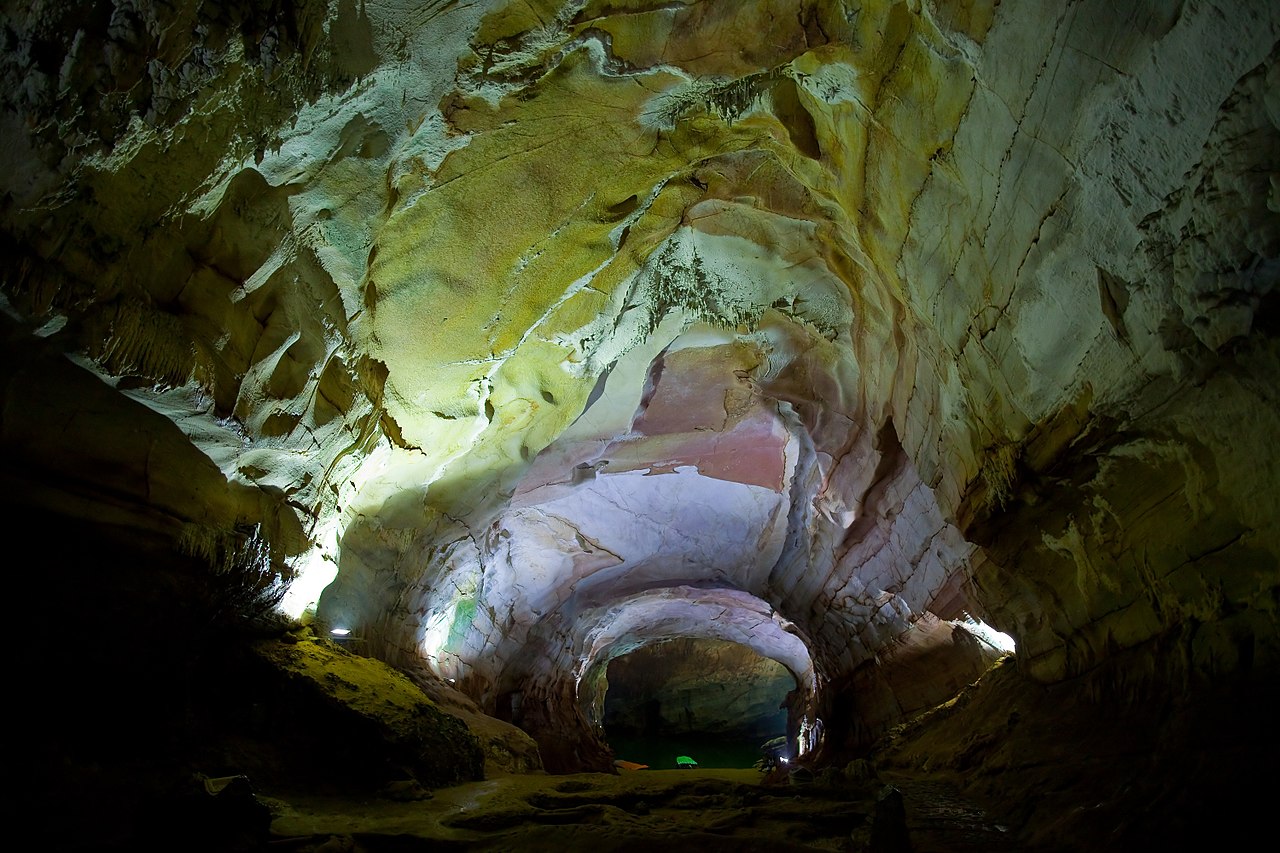
The travel landscape of Ninh Binh has three distinct zones, each with its own signature experience. Tam Coc ('three caves') is the southern zone, the original Ninh Binh tourism site since the 1990s, a 90-minute rowboat trip up the Ngo Dong River through three natural cave tunnels carved through the limestone karst, with rice paddies and karst hills lining the river. The signature image is the conical-hat-wearing rower paddling with her feet (a uniquely Ninh Binh local technique) through the karst valley. Trang An is the second zone, slightly north, a 2-3 hour rowboat circuit through nine caves and twelve historical temple sites, more dramatic karst topography than Tam Coc, and the location where King Kong: Skull Island was partially filmed in 2017. Hang Mua is the third zone, near Tam Coc, a 500-step climb up a karst peak to a small mountaintop pagoda and the most-photographed panoramic view in Ninh Binh, looking down over the Tam Coc river and surrounding karst valley.
Beyond the karst, Ninh Binh also has significant historical and religious sites: the Hoa Lu Ancient Capital (the 10th-century Vietnamese capital before the move to Hanoi, with surviving temple complexes), the Bich Dong Pagoda (a Buddhist temple complex carved into and built across three karst caves, dating to 1428), and the Bai Dinh Pagoda (a modern but enormous Buddhist complex, the largest in Vietnam, with a 500-meter long corridor of 500 stone bodhisattva statues). The surrounding rural province offers excellent cycling and motorbike-touring through the rice-paddy villages. Most international visitors stay 2-3 nights, either as a structured day-or-overnight trip from Hanoi or as a deliberate base for 3-5 days of slower-paced rural Vietnam. The Cuc Phuong National Park (Vietnam's first national park, with primate rescue center) is 45 km from Ninh Binh and is the longer-trip add-on.

Best Time to Visit
January to April, and September to November — clearer skies
Ninh Binh follows the standard northern Vietnam climate. Spring (February-April) and autumn (September-November) are the genuine sweet spots, daytime highs of 65-80F, lower humidity, and the clearer skies that make the karst landscape most dramatic. The rice paddies are at their most photogenic during the May/early-June planting (mirror-water reflections) and the September/early-October harvest (golden ripening rice). Summer (May-August) is hot (85-95F) and humid; the May-June paddies are beautiful but the boat-cave temperatures inside the karst are oppressive. Winter (December-January) is cool (50-65F) and often grey/foggy, which can obscure the karst panoramic views but creates atmospheric river-mist photographs. Tet (Vietnamese New Year, late January-mid February) brings domestic crowds and closures.
Top Attractions
Tam Coc Boat Trip
Boat: $5-$10; entrance $2-$4; tip $1-$3The original Ninh Binh experience, a 90-minute traditional rowboat trip up the Ngo Dong River through three natural limestone-karst cave tunnels, with rice paddies and karst hills lining the river. Two passengers per boat, rowed by a local woman (typically with feet rather than hands, the uniquely Tam Coc technique). Bring small Vietnamese dong for the customary tip ($1-$3) to the rower.
Trang An UNESCO Boat Tour
Boat tour: $10-$15 per personThe 2-3 hour rowboat circuit through the Trang An Landscape Complex — nine river caves carved through the karst, twelve historical temple sites along the route, and significantly more dramatic karst topography than Tam Coc. Three different routes (Route 1, 2, 3) each visit different caves and temples. Smaller crowds and longer experience than Tam Coc. Where King Kong: Skull Island was partially filmed.
Hang Mua 500-Step Climb
Entry: $5-$10The most-photographed Ninh Binh viewpoint, a 500-step stone-staircase climb up a karst peak near Tam Coc to a small mountaintop pagoda. The summit gives a panoramic view down over the Tam Coc river snaking through the karst valley and the surrounding rice paddies. Best at sunrise (5:30am) or just before sunset for the warm golden light.
Bich Dong Pagoda
Free entryThe 1428 Buddhist temple complex carved into and built across three karst caves, Lower Pagoda at the base of the mountain, Middle Pagoda inside a cave, Upper Pagoda at the summit. A 30-minute walk and climb. The cave-temple combination is uniquely atmospheric; the architectural integration with the natural karst is one of Vietnam's most distinctive Buddhist sites.
Hoa Lu Ancient Capital
Entry: $4-$6The 10th-century Vietnamese capital city (968-1010 AD, before the move to Hanoi) — surviving temple complexes dedicated to the Dinh and Le dynasty kings who unified Vietnam. Two main temples (Den Dinh Tien Hoang and Den Le Dai Hanh) with original stone carvings and dragon-decorated pillars. Combine with the surrounding karst landscape walk; many guided Trang An tours include Hoa Lu.
Cuc Phuong National Park Day Trip
Park entry $3-$5; day tour from Ninh Binh $40-$80Vietnam's first national park (1962), 45 km from Ninh Binh — primary rainforest, the Endangered Primate Rescue Centre (rescued langurs and gibbons), the Turtle Conservation Centre, and several walking trails through the rainforest. Combine with the Pu Luong Nature Reserve (4 hours further, less-visited terraced-rice-paddy region) for the longer-trip add-on.

Local Food
Goat Meat (De Nui)
$8-$25 per portionNinh Binh's signature regional dish — mountain goat raised in the karst hills, prepared multiple ways (grilled goat with sesame, goat hot pot, goat stir-fry, goat sausage). Restaurant De Trinh, De Nhi, and the famous Hoang Hai Goat Restaurant serve the canonical regional versions. The mountain goat has a stronger flavor than lamb; pairs with mountain-rice wine.
Com Chay (Crispy Rice)
$3-$8 per portionA Ninh Binh specialty — pan-fried crispy rice cakes (made from glutinous rice formed into discs and deep-fried) topped with stewed beef, pork, or chicken in a savory sauce. Originally a traveler's pocket food; now a restaurant standard. Most Ninh Binh restaurants serve it; the central market vendors do the casual takeaway version.
River Fish (Cá Mè)
$10-$25 per portionFreshwater fish from the surrounding rivers and rice paddies, typically grass carp, snakehead fish, or eel, prepared grilled, fried, or in a sour soup (canh chua). The riverside restaurants near Tam Coc and Trang An serve the freshest versions. Eaten with sticky rice and fresh herbs.
Snail Hot Pot (Lau Oc)
$15-$30 per pot (serves 3-4)Vietnamese-style snail hot pot — large river snails simmered in a clear lemongrass-and-ginger broth with vegetables and rice noodles, eaten with the hands (use a toothpick to extract the snail from the shell). A communal dish; one pot serves 3-4 people. Acquired-taste for first-timers but a regional specialty.
Vietnamese Coffee (Cà Phê Sữa Đá)
$1-$3 per cupStrong slow-drip Vietnamese coffee with sweetened condensed milk over ice. The standard Vietnamese morning drink. Cafés in central Ninh Binh and the larger guesthouses near Tam Coc and Trang An serve excellent versions. The Vietnamese highland-grown coffee (Da Lat or Buon Ma Thuot beans) is among the best in Asia.
Budget Guide
Budget
$20-$60/day
Hostels and budget guesthouses ($8-$25/night) — Tam Coc Garden Homestay, Trang An Family Homestay, Nguyen Shack Ninh Binh. Local meals at small restaurants and homestay-served family meals ($3-$8 per meal). Self-guided Tam Coc boat trip ($10), Hang Mua climb ($5), self-guided Bich Dong Pagoda. Bicycle rental ($2-$3/day) for surrounding rice-paddy villages.
Mid-Range
$60-$160/day
Boutique homestays and small hotels with karst views ($35-$100/night) — Tam Coc La Montagne Resort, Tam Coc Garden, Trang An Lamia Bungalow. Restaurant dinner at De Trinh, Tam Coc Sport Bar, or Father Cooking ($10-$22 per person). Trang An UNESCO boat tour, full-day Cuc Phuong National Park excursion, private motorbike tour through rural villages.
Luxury
$170-$420+/day
Tam Coc Garden Resort (the most popular boutique resort, $120-$280/night), Tam Coc La Montagne Resort Pool Villa ($200-$400/night), or rent a private karst-view villa ($150-$350/night). Private guide for the UNESCO sites, private chef-led Vietnamese cooking class, helicopter sightseeing over the karst landscape, full-day Pu Luong terraced-rice excursion with private driver.
Travel Tips
Take the train from Hanoi — much more pleasant than the bus. The Reunification Railway (Hanoi-Saigon line) stops at Ninh Binh Station in central Ninh Binh city; trains depart Hanoi multiple times daily and take 2-2.5 hours ($4-$15 for soft seat). The buses (Giap Bat station to Ninh Binh, 2-3 hours, $5-$10) are also fine but less comfortable. The train arrives in central Ninh Binh; a 20-minute taxi or motorbike ride takes you to the Tam Coc or Trang An tourist areas.
Stay in Tam Coc or Trang An, not central Ninh Binh city. Most international travelers base in the Tam Coc village or Trang An area (both about 8 km from central Ninh Binh) where the karst landscape is directly visible and walks to the attractions are short. The central Ninh Binh city is the transport hub and has no significant tourism value.
Visit Trang An over Tam Coc if you only have time for one. Trang An is meaningfully better — longer (2-3 hours vs 90 minutes), more dramatic karst, more historical temple stops, smaller crowds (more boat operators, longer route). Tam Coc is the older tourist site and remains more crowded. If you have 2 days, do both.
Climb Hang Mua at sunrise. The famous Hang Mua viewpoint summit is genuinely crowded by 8am in high season; the sunrise climb (start at 5am, summit by 5:30am) gives you a quiet 30-minute window for the panoramic photos before the buses arrive. Bring a flashlight for the 500-step climb in the dark.
Rent a motorbike or bicycle. The Ninh Binh attractions are spread across a 15-20km radius — bicycles ($2-$3/day) work for the closest Tam Coc + Hang Mua + Bich Dong loop, motorbikes ($8-$15/day) work for the broader area including Trang An and Hoa Lu. Roads are paved and traffic outside the towns is light.
Combine with Hanoi and Halong Bay for the standard northern Vietnam route. The classic itinerary: 3 nights Hanoi + 2-3 nights Ninh Binh + 2 nights Halong Bay (or Lan Ha Bay, the quieter alternative) + return to Hanoi for departure. For longer trips, extend to Sapa (10 hours overnight train northwest) or Phong Nha (cave region 12 hours overnight train south).
Vibes
Ready to visit Ninh Binh?
Let our AI plan a personalized itinerary with flights, hotels, and activities.
Going with friends? Plan Ninh Binh together in a group room, where everyone votes on dates and budget and books their own way.
Related reads

Photo by Clay Banks on Unsplash
Destination Guide
A First-Timer's Guide to Tokyo

Photo by Aayush Gupta on Unsplash
Destination Guide
48 Hours in Lisbon: The Perfect Weekend

Photo by Charlotte Noelle on Unsplash
Destination Guide
Hidden Gems of the Amalfi Coast

Photo by KUSHAGRA DHALL on Unsplash
Destination Guide
7 Best Street Food Cities in the World

Photo by Logan Armstrong on Unsplash
Destination Guide
48 Hours in Barcelona: Sun, Tapas, and Gaudi

Vietnam
Sapa Travel Guide

India
McLeod Ganj Travel Guide

Cambodia
Kampot Travel Guide
Vietnam
Phong Nha Travel Guide

India
Rishikesh Travel Guide

Photo on Unsplash
Nepal
Pokhara Travel Guide

Photo on Unsplash
Jettova News