Overview
Havana (La Habana) is the capital of Cuba and the largest city in the Caribbean, about 2.1 million people spread across the northern coast of the island, with a 16-kilometer Malecón seawall running along the city's Atlantic edge. Founded by the Spanish in 1519 and serving as the principal Caribbean port for the Spanish Empire's American silver shipments throughout the colonial period, Havana's historic core (Habana Vieja, Old Havana) holds one of the most extensive Spanish-Colonial architectural ensembles in the Western Hemisphere — UNESCO inscribed Old Havana and its system of fortifications in 1982.
What gives Havana its singular character today is the political and economic isolation. After the 1959 revolution and the US trade embargo that followed in 1960, Cuba was effectively cut off from the American consumer economy for over 60 years. The most visible result: 1950s American cars (Chevys, Buicks, Cadillacs, Plymouths, Studebakers) still cruise the streets, repaired endlessly by mechanics who can't import parts and have learned to fabricate them. The colorful classic-car taxis along the Malecón are the iconic Havana image, but the cars are also genuine working transportation for locals, typically 60+ years old and held together with engineering ingenuity.
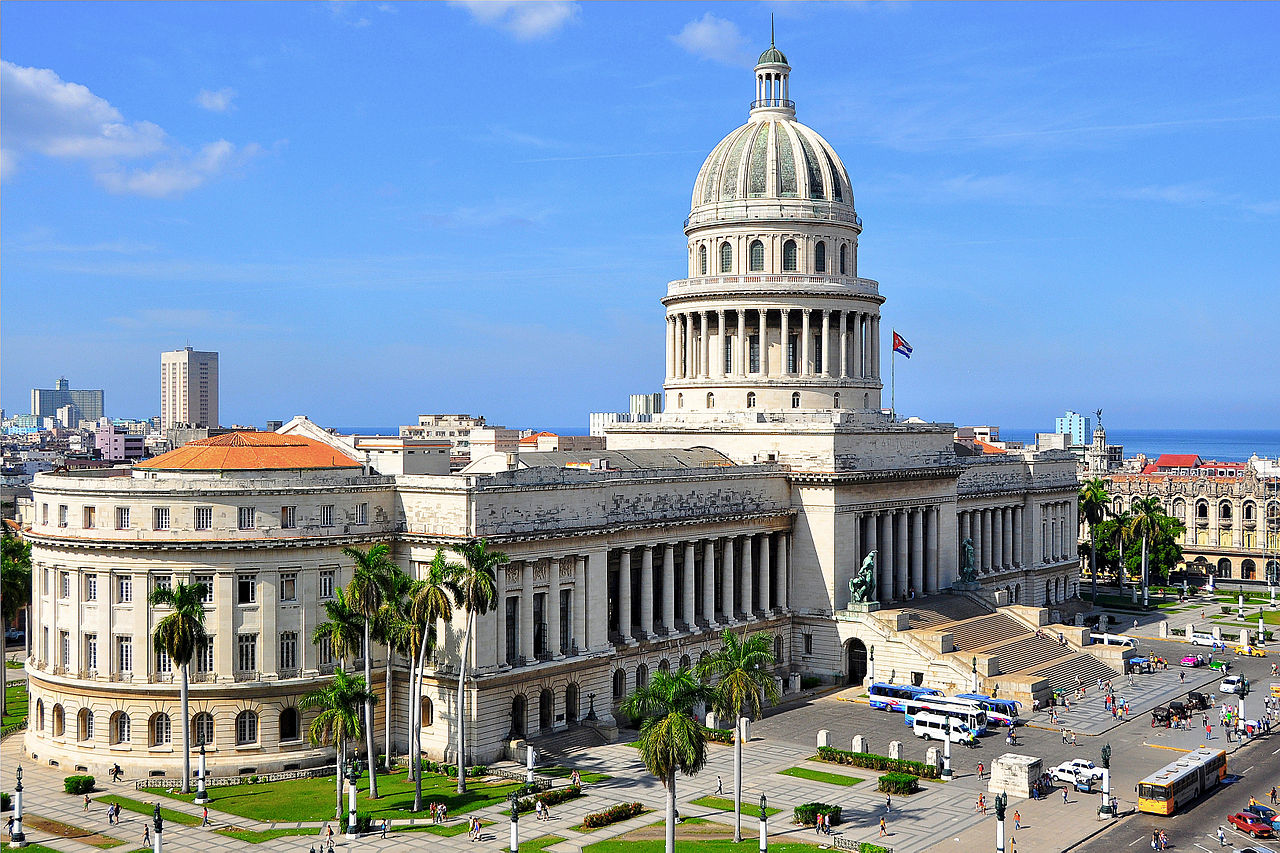
Beyond the cars, Habana Vieja's core anchors the visitor experience: the bright pink Catedral de San Cristóbal on Plaza de la Catedral; Plaza Vieja (now beautifully restored as the most-photographed of the four central plazas); Plaza de Armas with the old Spanish governor's palace; and the imposing El Capitolio (modeled directly on Washington's US Capitol, completed in 1929, recently restored). Ernest Hemingway lived in Havana from 1939 to 1960. His home at Finca Vigía on the outskirts is a museum, and his favorite bars (La Bodeguita del Medio for the mojito he invented there, El Floridita for the frozen daiquiri he refined) remain working pilgrimage sites. The Cabaret Tropicana (1939) still runs nightly Havana revues; the Buena Vista Social Club music tradition runs in venues throughout the city. Most travelers spend 3-5 nights, often combined with the colonial city of Trinidad and the Viñales tobacco region for a complete week.

Best Time to Visit
November to April (dry season)
Cuba's dry season runs November through April with sunny days, daytime highs in the 80s, and minimal rainfall. December-March is the busiest international tourism window. June-November is hurricane season — September and October are the highest-risk months. Carnaval de La Habana (August) is the major local festival but coincides with the hottest, most humid weather. The shoulder months (late April-May, late October-early November) split the difference.
Top Attractions
Habana Vieja (Old Havana) Walking Tour
Free to walk; guided tour $25-$50The four central plazas — Plaza de la Catedral, Plaza Vieja, Plaza de Armas, and Plaza de San Francisco — anchor the UNESCO-inscribed colonial core. Walk between them along Calle Obispo and Calle Mercaderes; a guided walking tour with a local historian adds essential context for $25-$50.
Classic Car Convertible Tour
$30-$80 per car (up to 4 passengers)A 1-hour tour in a 1950s American convertible (Chevy Bel Air, Buick Roadmaster, Cadillac Eldorado) along the Malecón and through Vedado — touristy but iconic. Photo stops at Hotel Nacional, the Plaza de la Revolución, and a colonial-quarter loop.
Malecón Seawall Walk
FreeHavana's 16-kilometer ocean boardwalk runs along the Atlantic from Habana Vieja through Centro Habana to Vedado. Locals gather at sunset to fish, drink rum, play music, and socialize. The most authentic Havana scene; walk the full length east to west over 2-3 hours.
Hemingway Bars (La Bodeguita & El Floridita)
Drinks: $5-$8 eachErnest Hemingway's famous Havana drinking spots, both still functioning — La Bodeguita del Medio (the mojito bar, founded 1942) and El Floridita (the frozen daiquiri bar, where Hemingway's bronze bust still leans against his usual corner). Both are touristy but historically essential.
Finca Vigía (Hemingway Home Museum)
$8 entry20 minutes outside the city — Hemingway's home from 1939 to 1960, preserved as it was when he left for the US in 1960. The house holds his typewriter, 9,000-book library, and the small graves of his beloved dogs. The pool and tropical gardens are as he kept them.
Cabaret Tropicana Performance
Show: $75-$120; show + dinner $130-$200The 1939 open-air cabaret in the Marianao district — nightly performances featuring 200+ dancers, music, and the classic Havana revue format. Touristy and expensive but a unique Caribbean cultural moment. Show + dinner package is the standard booking.

Local Food
Ropa Vieja
$12-$25Cuba's national dish — shredded slow-cooked beef in a tomato-pepper sauce with onions, garlic, and a touch of white wine. Served with white rice, black beans (often combined as moros y cristianos), and fried plantains. Best at family-run paladar restaurants like La Guarida, San Cristóbal, and El Cocinero.
Moros y Cristianos
$3-$8 as sideRice cooked with black beans (the name 'Moors and Christians' refers to the dark beans against the white rice) — Cuba's universal side dish, served with every protein. Eaten at every meal; best at the small paladares for the homestyle version.
Lechón Asado
$10-$22Whole roast pork, slow-cooked over wood coals. The Cuban Christmas tradition served year-round. Served with mojo (a sauce of bitter orange juice, garlic, and olive oil), white rice, and black beans. The roadside lechoneras outside Havana serve the most authentic versions.
Mojito at La Bodeguita
$5-$8 per cocktailThe original mojito — light rum, lime juice, sugar, mint leaves, and soda water, garnished with mint sprig and lime. La Bodeguita del Medio claims to have invented it and Hemingway preferred theirs. Touristy but the classic Cuban cocktail experience.
Tostones & Yuca con Mojo
$3-$8 as sideTwice-fried green plantain slices (tostones) and boiled yuca (cassava root) with mojo garlic-citrus sauce. The Cuban side-dish duo. Served at every paladar and casual restaurant alongside main dishes.
Budget Guide
Budget
$40-$90/day
Casas particulares (private guesthouse rooms, the Cuban equivalent of B&Bs) for $20-$50/night. Eat at small private paladares and Cuban cafes ($8-$15 per meal). Walk Habana Vieja and the Malecón for free. Use shared classic-car taxis (collectivos) for short trips ($1-$3).
Mid-Range
$130-$250/day
Mid-range boutique hotels, Hotel Saratoga (when reopened post-2022 explosion), Iberostar Parque Central, Hotel Inglaterra ($90-$200/night). Dinner at La Guarida, San Cristóbal, El Cocinero ($35-$70 per person). Classic car convertible tour, Cabaret Tropicana, Hemingway home day trip.
Luxury
$300-$700+/day
Stays at Gran Hotel Manzana Kempinski (the 5-star luxury option, $300-$700/night), Hotel Nacional de Cuba (the historic 1930 art-deco grand hotel), or private rental villas. Private historical walking tours, Tropicana VIP table, private Hemingway home tour, fine dining at Cocinero and Río Mar.
Travel Tips
US citizens need a special license. Travel to Cuba from the US requires qualifying under one of 12 OFAC-approved categories (Support for the Cuban People is the most common). Most visitors travel via a 3rd country (Mexico, Canada, Bahamas) or through US carriers that handle the paperwork. Bring your itinerary documentation.
Cash, cash, cash. US credit and debit cards do NOT work in Cuba due to the embargo. Bring USD or EUR cash; exchange at the airport or at major hotel cadeca offices to Cuban Pesos (CUP). Most paladar restaurants and casas particulares prefer cash USD or EUR directly. Bring more than you think you'll need.
Stay at a casa particular for the cultural experience. Private guesthouse rooms run by Cuban families (typically $20-$50/night, including breakfast) give you genuine local interaction unavailable at the international hotels. AirBnB and Casa Particular Cuba websites have listings.
Internet is limited and expensive. WiFi requires purchasing Etecsa cards ($1-$3/hour) usable only at designated public hotspots (parks, hotel lobbies). Most casas particulares don't have in-room WiFi. Download offline maps and entertainment before arriving.
Drink bottled water and avoid raw vegetables. Cuban water is technically safe in most parts of Havana but visiting Americans frequently react to it. Stick to bottled or boiled water; raw salads and unwashed produce can cause stomach issues. Cooked food at established paladares is generally safe.
Combine with Trinidad (4 hours east, the colonial UNESCO city) and Viñales (2 hours west, the tobacco-growing region with karst hills) for a complete week. Cuba's interior is more visually striking than Havana alone. The broader trip is well worth the extra days.
Vibes
Ready to visit Havana?
Let our AI plan a personalized itinerary with flights, hotels, and activities.
Going with friends? Plan Havana together in a group room, where everyone votes on dates and budget and books their own way.
Related reads

Photo by Clay Banks on Unsplash
Destination Guide
A First-Timer's Guide to Tokyo

Photo by Aayush Gupta on Unsplash
Destination Guide
48 Hours in Lisbon: The Perfect Weekend

Photo by Charlotte Noelle on Unsplash
Destination Guide
Hidden Gems of the Amalfi Coast

Photo by KUSHAGRA DHALL on Unsplash
Destination Guide
7 Best Street Food Cities in the World

Photo by Logan Armstrong on Unsplash
Destination Guide
48 Hours in Barcelona: Sun, Tapas, and Gaudi

Photo on Unsplash
USA
Santa Fe Travel Guide

Photo on Unsplash
Mexico
Guanajuato Travel Guide

Photo on Unsplash
Mexico
Mérida Travel Guide

Photo on Unsplash
Mexico
Oaxaca Travel Guide

Photo on Unsplash
USA
Savannah Travel Guide

Photo on Unsplash
USA
Albuquerque Travel Guide

Photo on Unsplash
Destination Guide