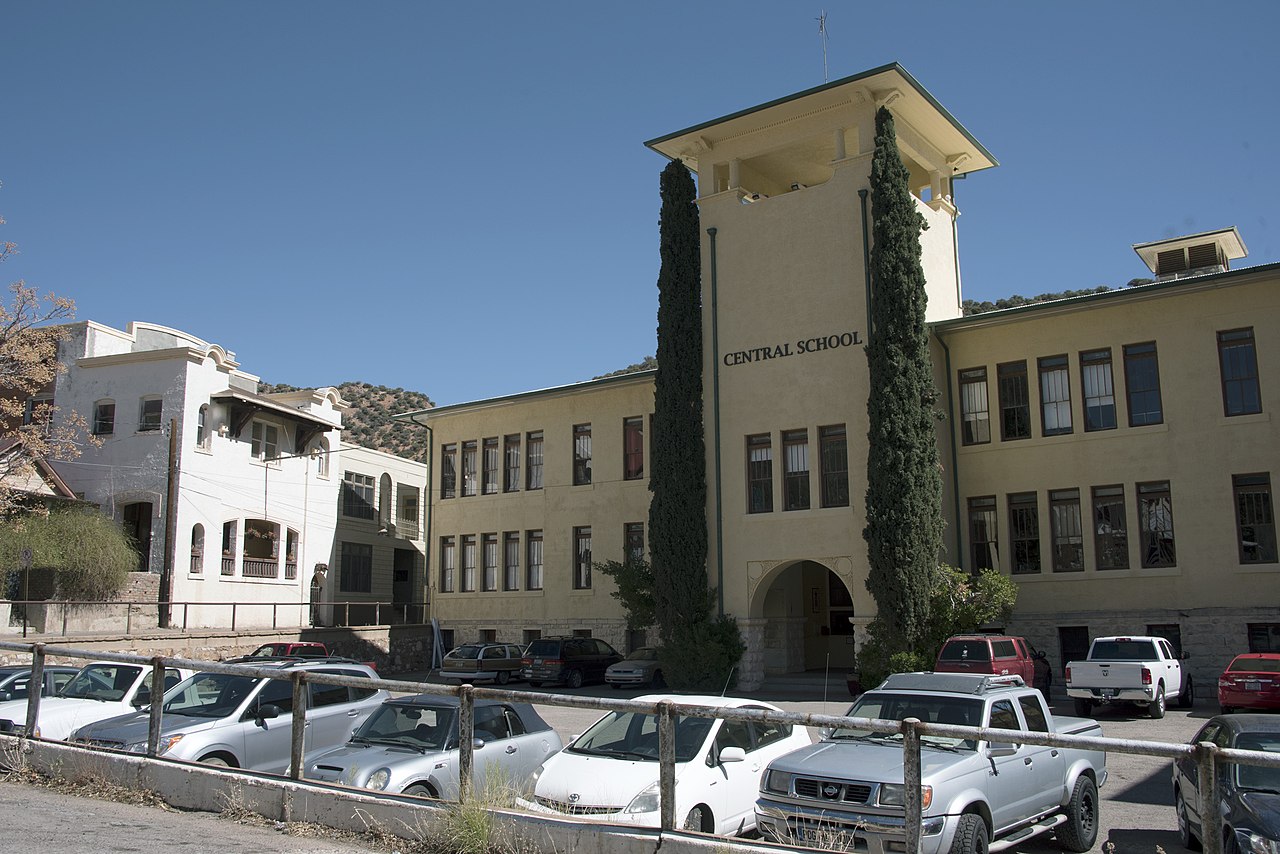
Overview
Bisbee is a small mountain town of about 5,000 residents in southeastern Arizona's Cochise County, 145 kilometers southeast of Tucson at 1,650 meters (5,400 feet) elevation in the Mule Mountains, just 17 kilometers north of the Mexican border. The town was founded in 1880 as a copper-mining settlement after the discovery of one of the richest copper-and-silver-and-gold ore deposits in the world; over the next 95 years (until the mine closure in 1975), the surrounding Warren Mining District produced about 8 billion pounds of copper, 3 million ounces of gold, and 102 million ounces of silver — making Bisbee one of the most productive mining sites in US history. At its 1910 peak, Bisbee had a population of about 25,000 (the largest city between St. Louis and San Francisco at the time), elaborate Victorian-and-Edwardian architecture financed by the mining wealth, multiple newspapers, electric streetcar service, and the famous Phelps Dodge Copper Queen Hotel (1902, still operating today as Arizona's oldest continuously operating hotel).
The 1975 mine closure (when the Phelps Dodge Corporation, the dominant Bisbee operator, ceased operations as falling copper prices made the deeper mines unprofitable) could have turned Bisbee into a ghost town like many of the surrounding Arizona mining settlements. Instead, the abandoned mining workers' housing and the surviving Victorian downtown attracted a wave of hippies, artists, and counterculture refugees in the late 1970s, the 'cheap living + dramatic landscape' combination produced the modern Bisbee arts-and-historic-preservation identity. Today the town is known for its unusual concentration of working artists (about 100+ galleries and studios in a town of 5,000), the famous Bisbee 1000 Stair Climb (an annual October fundraiser climbing the various historic staircases that wind through the steep mining-camp neighborhoods), and the broader 'mining heritage tourism' that anchors the modern economy. The town's distinctive built environment — Victorian houses precariously perched on steep hillsides, narrow zigzag streets carved into the mining gulch, abandoned mine infrastructure preserved as landscape art — has earned Bisbee comparisons to small Italian hill towns and historic European mining settlements.
Beyond the historic preservation and arts scenes, Bisbee offers significant cultural and outdoor attractions. The Queen Mine Tour (a 75-minute underground tour of the original Copper Queen Mine, descending 460m into the surviving 1900s mining shafts on the original mine train, guided by former Bisbee miners) is the canonical historic experience. The Bisbee Mining and Historical Museum (a Smithsonian-affiliated museum in the central historic district) provides comprehensive context on the mining era and the town's history. The famous Lavender Pit (the dramatic 5-km-circumference open-pit copper mine immediately south of central Bisbee, abandoned 1974 but preserved as an industrial-landscape monument) is one of the most visually striking Bisbee features. The surrounding 1880s mining-era cemeteries (the famous Evergreen Cemetery with its surviving Mexican-immigrant-and-Cornish-miner grave markers) provide additional historical depth. The Chiricahua National Monument (90 minutes east of Bisbee) and the famous Boot Hill cemetery in Tombstone (45 minutes northwest, the historic 'town too tough to die' with the OK Corral, the famous 1881 gunfight site) are the standard regional day trips. Most international visitors stay 2-3 nights in Bisbee, often combined with Tucson (already in our blog as batch 1) and the broader southeastern Arizona route.

Best Time to Visit
October to April — cool dry weather, ideal for walking
Bisbee's high-desert climate (1,650m elevation) gives it a meaningfully cooler climate than the lower-elevation Tucson and Phoenix. The genuine sweet spot is October-April, daytime highs of 60-78F, cool nights (35-55F), low humidity, and reliable conditions for the steep walking that defines Bisbee. November-February is the most pleasant; the surrounding Mule Mountains see occasional snow but the town stays mostly snow-free. May-September is hot, daytime highs of 85-95F (less brutal than Tucson because of the elevation, but still genuinely warm). The famous Bisbee 1000 Stair Climb (mid-October) and the Bisbee Art Walk (multiple weekends each year) are the largest cultural events. The annual Bisbee Pride parade (late June) is one of southwestern Arizona's most distinctive events.
Top Attractions
Queen Mine Tour
Tour: $15-$25 per personBisbee's signature historic experience, a 75-minute underground tour of the original Copper Queen Mine, descending 460m into the surviving 1900s mining shafts on the original mine train, guided by former Bisbee miners who provide detailed explanations of the mining process and historical anecdotes. Hard hats and miners' lights provided. Daily departures.
Bisbee Mining and Historical Museum
Entry: $8-$15Smithsonian-affiliated museum in the central historic district — comprehensive collection on the 1880s-1970s mining era, the famous Bisbee Deportation of 1917 (when Phelps Dodge security forces forcibly deported 1,300 striking miners to New Mexico), Cornish and Mexican immigrant mining communities, and the broader town history. 60-90 minute visit.
Lavender Pit Lookout
FreeThe dramatic 5-km-circumference open-pit copper mine immediately south of central Bisbee, abandoned 1974 but preserved as an industrial-landscape monument. The lookout viewpoint on Highway 80 provides the dramatic perspective; the pit is 280m deep at maximum. One of the most visually striking abandoned-industrial landscapes in the American Southwest.
Historic District Walking & Art Gallery Tour
Free walking; gallery entries freeWalk the steep zigzag streets of the original mining-camp neighborhoods — Brewery Gulch (the historic 'red-light district' street, now full of bars and restaurants), the Subway Street (with the famous Iron Man steel-art sculpture), the High Road (the famous Victorian mansions). About 100+ art galleries and studios scattered through the historic district. Multiple combined-ticket museum walks ($15-$30).
Tombstone Day Trip (OK Corral)
OK Corral: $10-$15; Bird Cage: $10-$15; combined $25-$35The famous 'town too tough to die' 45 minutes northwest of Bisbee. The historic Tombstone, Arizona of the 1881 OK Corral gunfight between the Earp brothers (Wyatt, Virgil, Morgan) and Doc Holliday vs. the Clanton-McLaury gang. Visit the OK Corral (with daily reenactments), the Bird Cage Theatre (the surviving original 1881 saloon-and-brothel), and the Boot Hill cemetery. The town is genuinely touristy but the surviving original 1880s buildings are real.
Chiricahua National Monument
Entry: $25 per carThe dramatic 'Wonderland of Rocks' national monument 90 minutes east of Bisbee — surreal volcanic-rock formations carved by 27 million years of erosion into spires, columns, and balanced rocks. Multiple hiking trails (the easy Echo Canyon Loop, the moderate Heart of Rocks Trail) and the famous 12-km scenic drive. One of America's most underrated national park-system sites.

Local Food
Southwestern Mexican Cuisine
$10-$25 per portionBisbee's proximity to the Mexican border (17 km) defines the food scene — authentic Sonoran Mexican cuisine at multiple traditional restaurants. Santiago's Mexican Restaurant (the famous local institution), Café Roka (the upscale Mexican-American fusion), and the small Mexican-immigrant family restaurants. The standard Mexican breakfast (huevos rancheros, chilaquiles, machaca breakfast burritos) is widely available.
Sonoran-Style Hot Dog
$5-$12 per hot dogTucson's signature creation widely available in southeastern Arizona, a bacon-wrapped hot dog grilled, topped with pinto beans, chopped tomato, onion, mayo, mustard, jalapeño salsa, and crema, served on a bolillo (Mexican roll). Several Bisbee street vendors and casual restaurants serve them. The defining Tucson-and-southeastern-Arizona street food.
Brewery Gulch Bar Food & Saloon Cuisine
$10-$25 per mealBrewery Gulch's bars — Old Bisbee Brewing Company (the local craft brewery with the famous 'Copperdor' brown ale), Stock Exchange Saloon, the historic St. Elmo Bar (1902, the oldest continuously operating saloon in Arizona), and the surrounding casual restaurants. Standard pub-style food: burgers, sandwiches, traditional saloon fare. The genuine western-saloon atmosphere is part of the experience.
Pies, Tarts, and Coffee at Bisbee Coffee Company
Coffee: $3-$6; pies/pastries $4-$10Bisbee Coffee Company (the historic 1990s coffee roastery in the central historic district) — single-origin coffee roasted on-site, fresh-baked pies and pastries, and the small breakfast/lunch menu. The standard Bisbee morning ritual. Combine with a walk through the surrounding historic district.
Café Roka Tasting Menu
Tasting menu: $50-$90 per personCafé Roka in central Bisbee. The famous fine-dining restaurant that anchors the local food scene since 1992. The four-course tasting menu changes seasonally (typically featuring Southwest ingredients, fresh seafood from the Gulf of California 3 hours south, and the famous Café Roka onion soup). Reservations 1-2 weeks ahead in season.
Budget Guide
Budget
$80-$200/day
Mid-range hotels and B&Bs ($60-$140/night) — Copper Queen Hotel (the historic 1902 grand hotel, basic rooms), Bisbee Inn at Brewery Gulch, Bisbee Grand Hotel. Local meals at Santiago's, Bisbee Coffee Company, and small Mexican restaurants ($8-$20 per meal). Queen Mine Tour ($15-$25), free historic district walking, self-guided gallery tour.
Mid-Range
$180-$420/day
Boutique historic hotels in restored mining-era buildings ($120-$260/night) — Copper Queen Hotel premium rooms, The Eldorado Hotel, The Inn at Castle Rock. Restaurant dinner at Café Roka, Santiago's, or Stock Exchange Saloon ($35-$80 per person with drinks). Combined museum ticket, Queen Mine Tour, Lavender Pit viewpoint, full-day Tombstone + Chiricahua excursion.
Luxury
$300-$700+/day
Copper Queen Hotel Penthouse Suites ($250-$500/night), The Eldorado Hotel ($180-$350), or rent a private historic Victorian house ($150-$400/night). Private guide for the historic district with a former Bisbee miner, private Queen Mine Tour, private chef-led Sonoran cooking class, private day-trip to Chiricahua National Monument with naturalist guide, helicopter sightseeing over the Mule Mountains and the surrounding desert.
Travel Tips
Fly into Tucson (TUS) — Arizona's second-largest airport, 145 km northwest of Bisbee, ~1.5 hours by car. Direct flights from most major US hubs (Dallas, Denver, Houston, Phoenix, Las Vegas, Los Angeles, Atlanta, Chicago, Newark) on American, United, Delta, Southwest, Alaska, and Allegiant. From Tucson airport to Bisbee: rental car ($35-$90/day) or shuttle service ($60-$120). The longer alternative: fly to Phoenix (PHX, 4 hours by car).
Stay in the historic district. Most international visitors arrive expecting modern hotel infrastructure and are surprised by Bisbee's small scale. The historic district is genuinely the entire town (the modern chain hotels are 5 km away in the suburb of Warren). The historic district hotels (Copper Queen Hotel, Bisbee Inn, Eldorado) provide the genuine Bisbee experience.
Bisbee is genuinely hilly — pack walking shoes. The mining-camp town is built into a steep gulch with the historic district streets climbing 30-50% grades. The famous 1880s wooden staircases (the foundation of the annual Bisbee 1000 Stair Climb in October) provide pedestrian shortcuts; walking shoes with rubber soles are essential. The downtown is genuinely walkable end-to-end but requires real climbing.
Visit Tombstone but adjust expectations. The famous OK Corral town 45 minutes northwest of Bisbee is genuinely worth visiting. But the modern Tombstone is heavily touristy with daily costumed-actor gunfight reenactments. Visit for the historical context (the original 1881 buildings really are preserved), the Boot Hill cemetery, and the dramatic landscape. Don't expect a quiet authentic experience.
Bring layers — desert temperatures swing 30-40°F daily. Bisbee's 1,650m elevation makes summer days hot (85-95F) but nights cool dramatically (55-65F); winter daytime is mild (60-72F) but nights can drop near freezing (28-45F). Pack synthetic or wool layers, sun protection, and good walking shoes for the historic district.
Combine with Tucson, Tombstone, and the southeastern Arizona route. The classic itinerary: 3-4 nights Tucson (with Saguaro National Park, the Sonoran Desert Museum, the historic mission of San Xavier del Bac) + 2-3 nights Bisbee + day trip to Tombstone + 1-2 nights at the surrounding state parks (Chiricahua, Patagonia Lake). For longer trips, extend to Sedona (5 hours north) or to White Sands National Park (5 hours east in New Mexico).
Vibes
Ready to visit Bisbee?
Let our AI plan a personalized itinerary with flights, hotels, and activities.
Going with friends? Plan Bisbee together in a group room, where everyone votes on dates and budget and books their own way.
Related reads

Photo by Clay Banks on Unsplash
Destination Guide
A First-Timer's Guide to Tokyo

Photo by Aayush Gupta on Unsplash
Destination Guide
48 Hours in Lisbon: The Perfect Weekend

Photo by Charlotte Noelle on Unsplash
Destination Guide
Hidden Gems of the Amalfi Coast

Photo by KUSHAGRA DHALL on Unsplash
Destination Guide
7 Best Street Food Cities in the World

Photo by Logan Armstrong on Unsplash
Destination Guide
48 Hours in Barcelona: Sun, Tapas, and Gaudi

Mexico
Puebla Travel Guide

USA
Taos Travel Guide

USA
Marfa Travel Guide

Photo on Unsplash
Ecuador
Quito Travel Guide

Photo on Unsplash
Guatemala
Antigua Travel Guide

Photo on Unsplash
USA
Albuquerque Travel Guide

Photo on Unsplash
Travel Hack